Coyote at the Water Dish
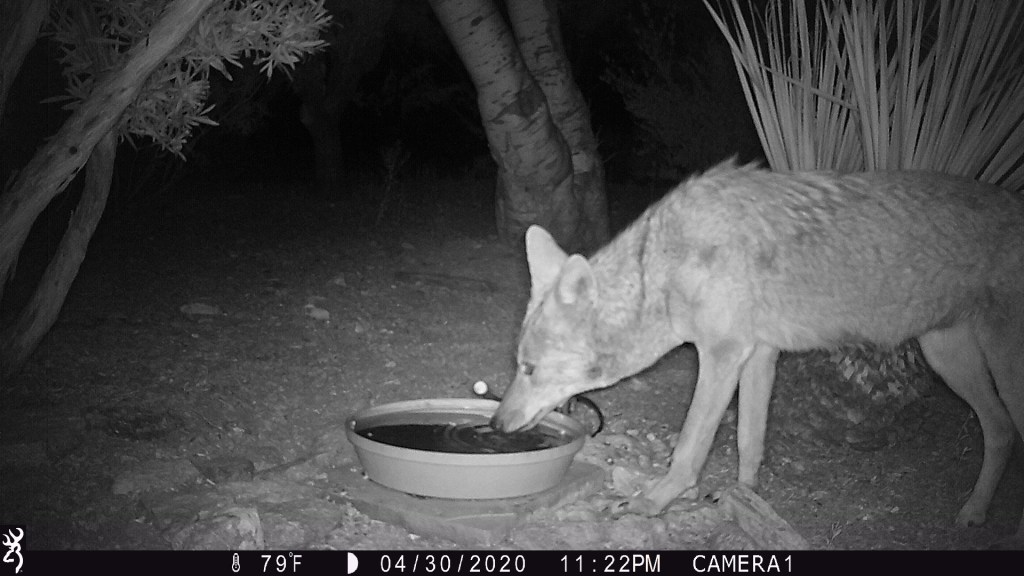
On April 19th rabbits, birds, and a healthy coyote stopped by for a drink of water. Here are the three best images.
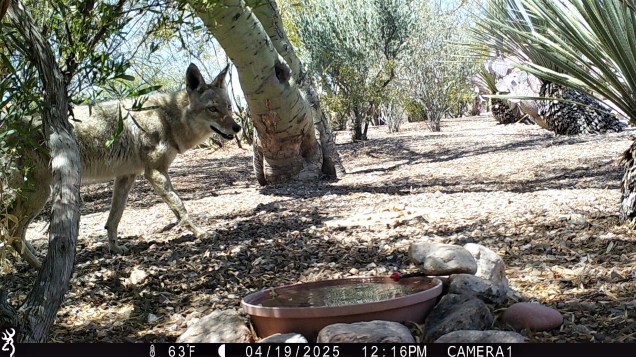
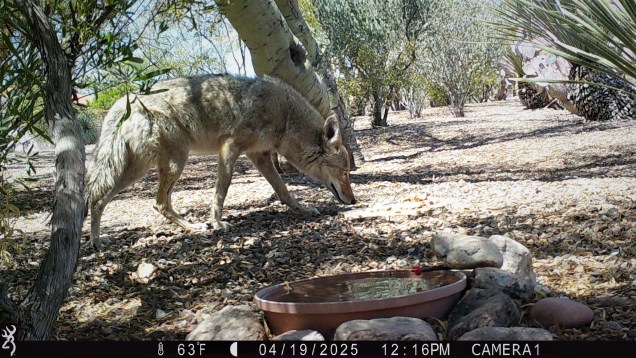
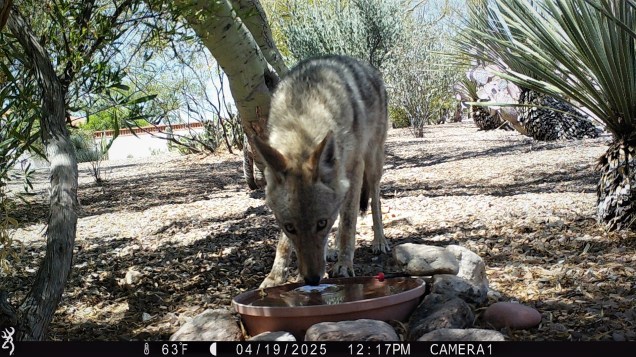
Coyote at the Water Dish
On April 19th rabbits, birds, and a healthy coyote stopped by for a drink of water. Here are the three best images.
Markleeville, CA

I’ve closed the door to my Facebook account – for political reasons.
Back to the challenges of my Word Press blog.
*****
I have a photo folder of signs — signs I’ve seen posted in my travel. Fun, pithy signs I’d like to share with you. I haven’t used my blog site in ages. Fingers crossed that the post gets posted. Eventually, I’ll figure out how to add background color. Imagine light beige and a more interesting layout. Susan
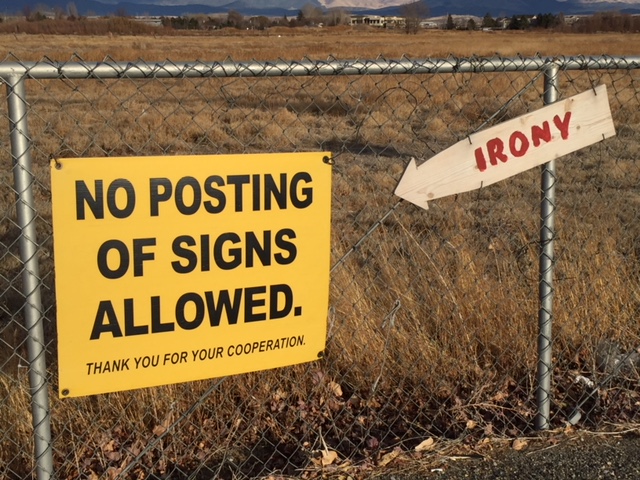
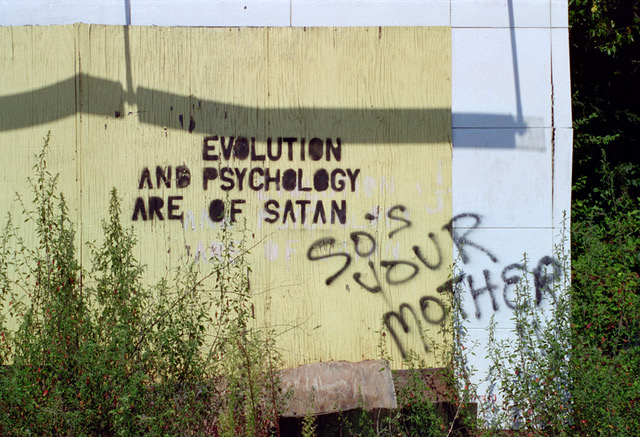
Fairfax County, Virginia

Kona, Hawaii
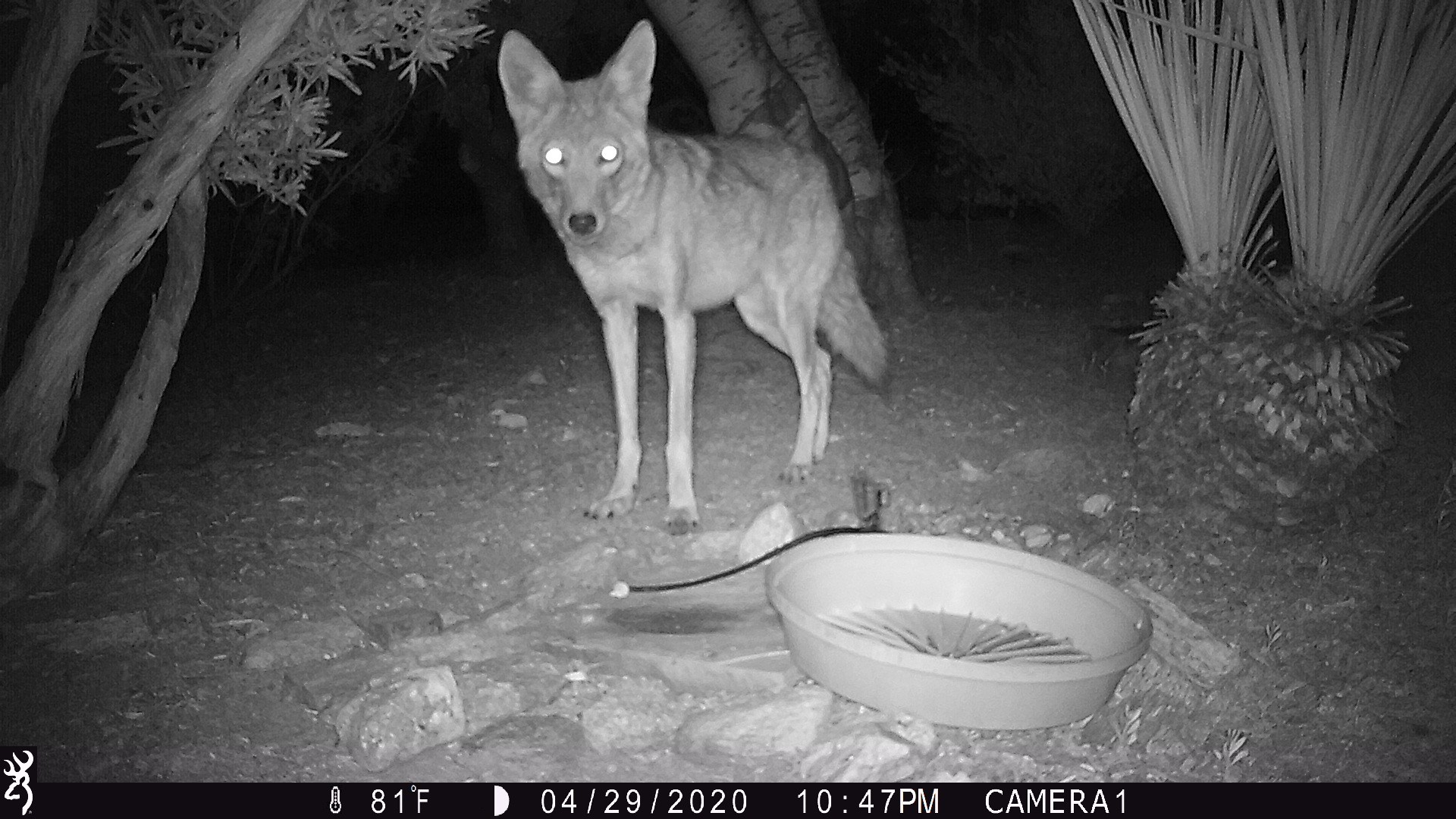
A handsome coyote came to the water dish for a drink. Where I live in Tucson, coyotes roam in packs or wander solo. Their food preferences are rodents, reptiles, insects, plants, and sometimes a family pet. They are more active after sunset and into the night. During a nighttime chase and capture their yelps could almost awaken the dead. Here’s what my field camera saw on the afternoon of April 24th.


Before digital cameras hit the photography market, I spent hours developing film, mixing chemicals, and printing images. My childhood Brownie was eventually replaced. As we all did, I advanced to a 35 mm camera with lenses and filters. I still admire the work of early photographers who most likely never dreamed of a digital age. My post of a few black & white portraits deserve the light of day. Released from negative strips, contact sheets, and 3-ring binders out they go into the Universe. (Perhaps not quite that far.) The portraits are of friends, neighbors, and people I met along the way.
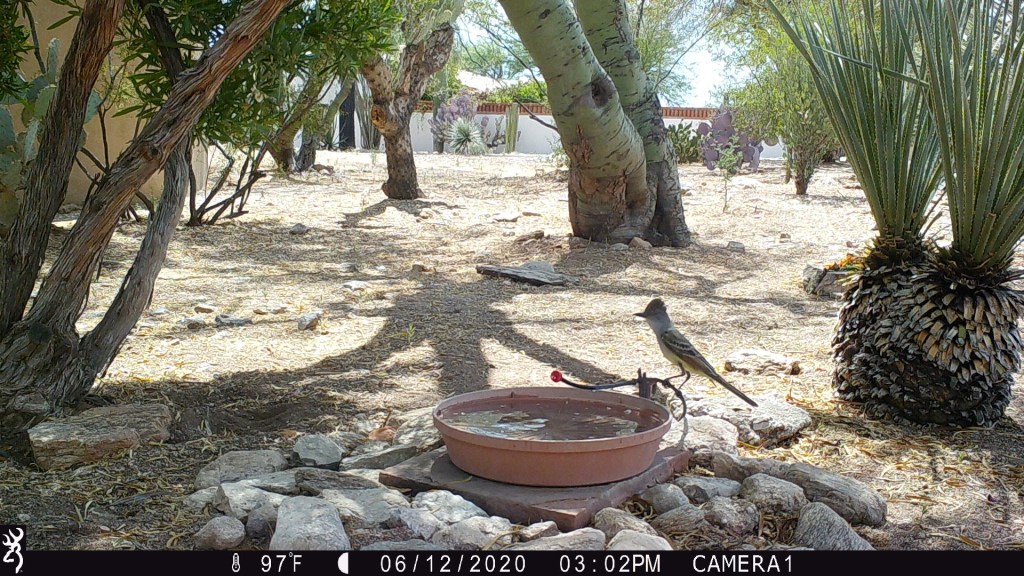
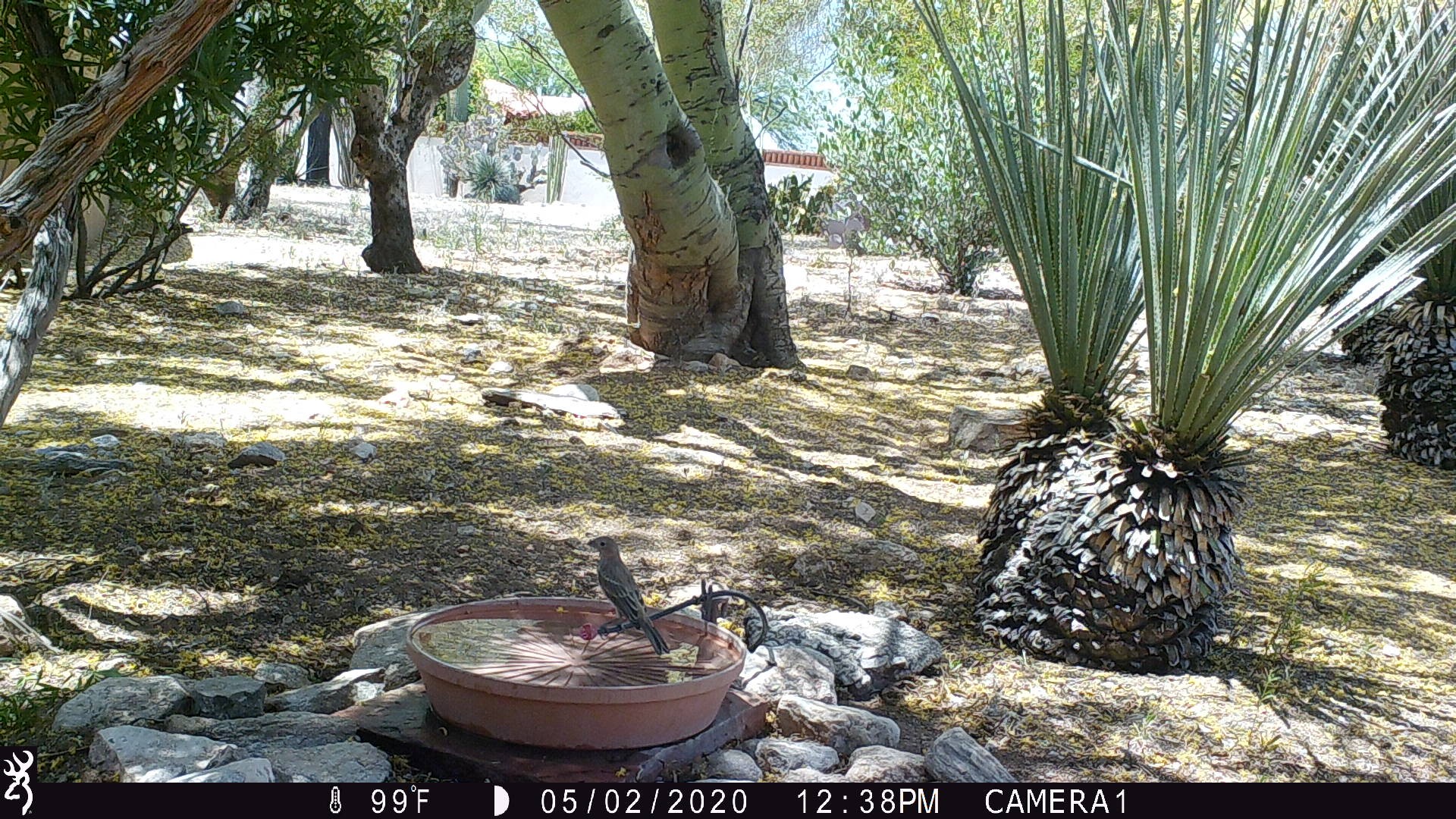
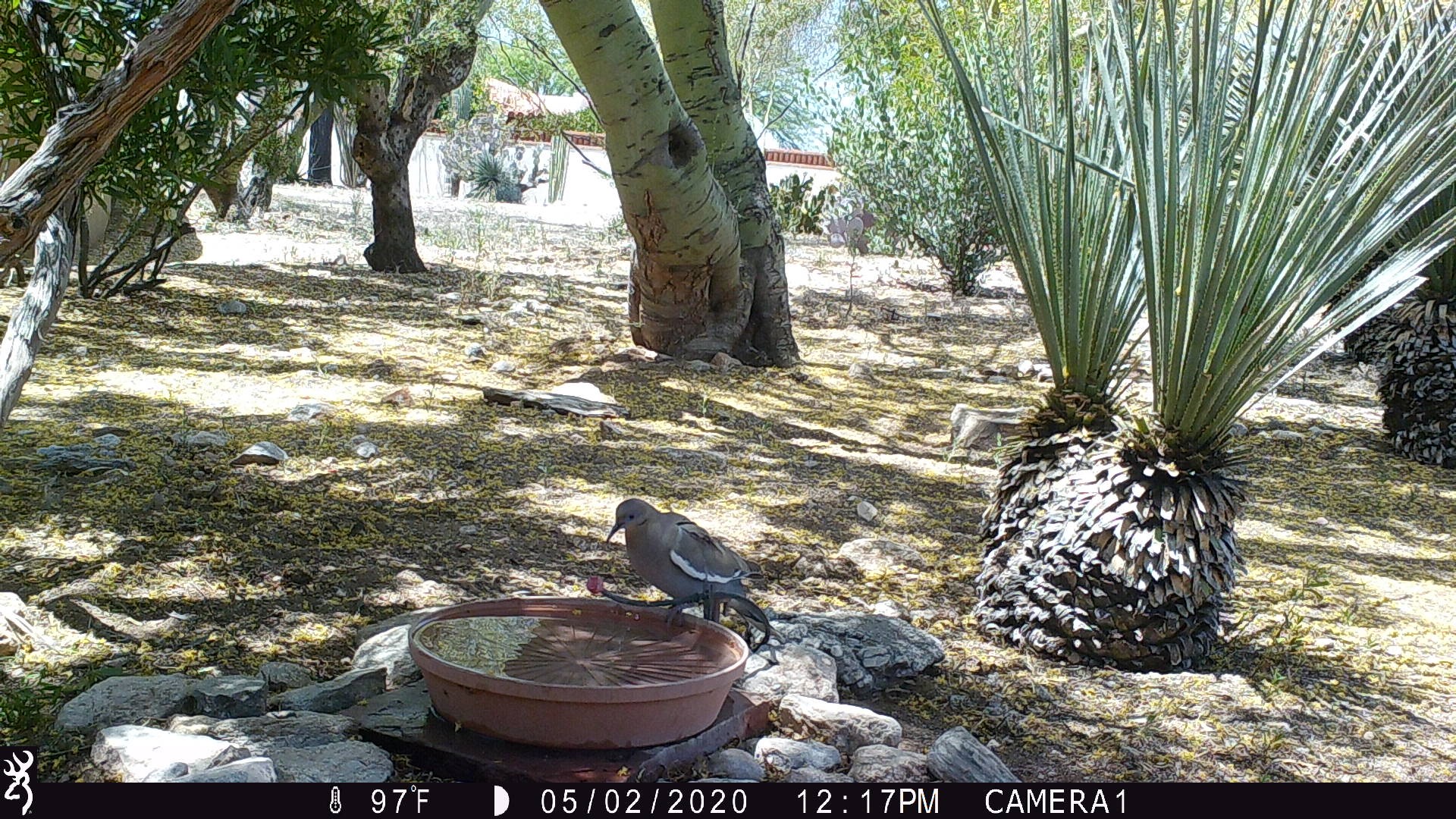
Tucson, AZ – Birds fly in for a drink of water, a dust bath, and a bit of shade. Here are images from June 12 taken with a Browning field camera.
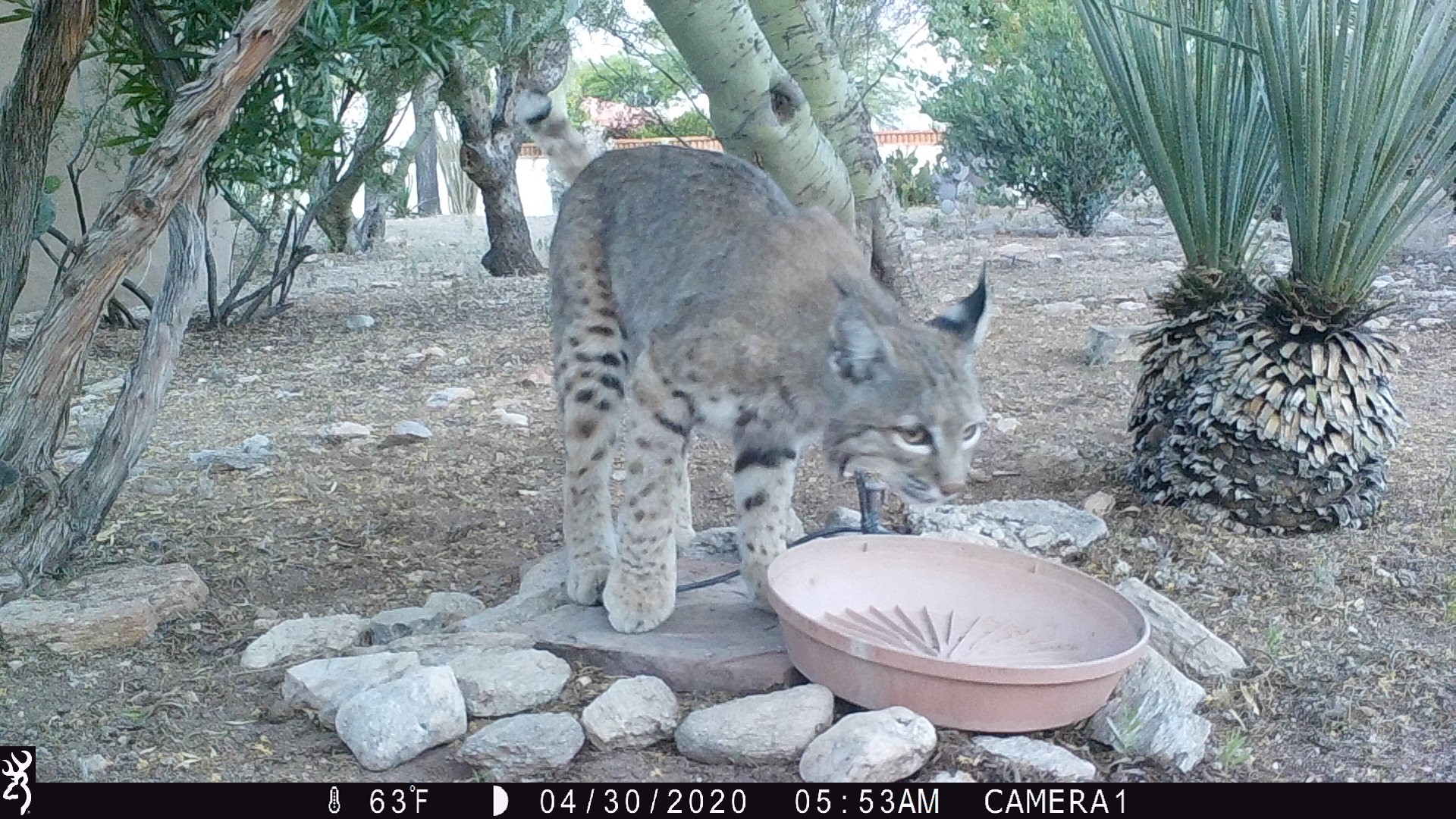
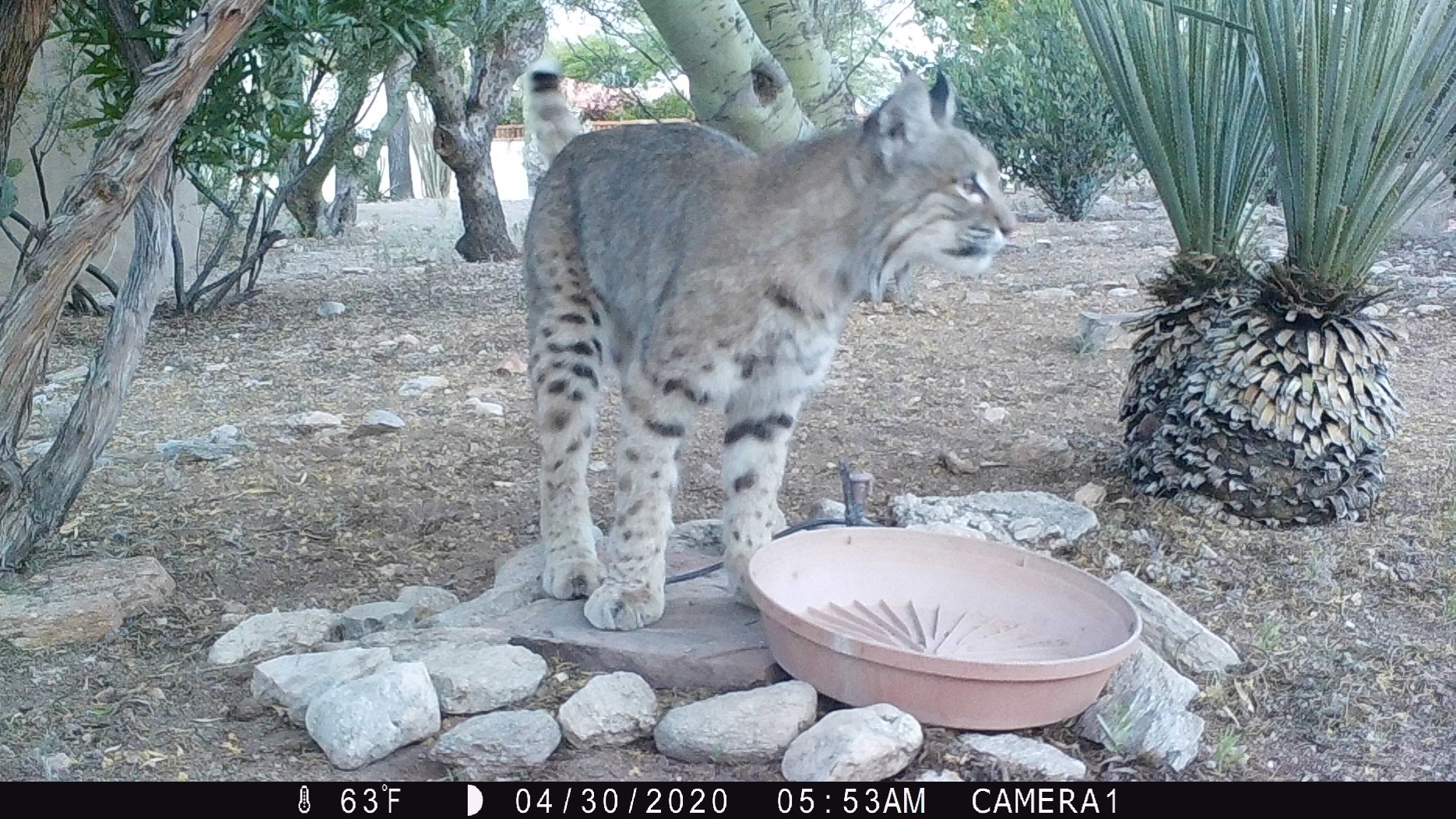
Tucson’s post-summer temperatures have been high – think climate change. Javelinas, bobcats, owls, rabbits, coyotes, Gambrel quails, doves all need water. The animals have a water dish available all day and all night. In exchange, I have the option to record their visits.
For images, I use a Browning trail camera (Model BTC-5HD). I wind the strap around a nearby tree, and flip the battery button. The camera eye responds to motion and records every flick of a feather. The six AA batteries store enough energy for several months.
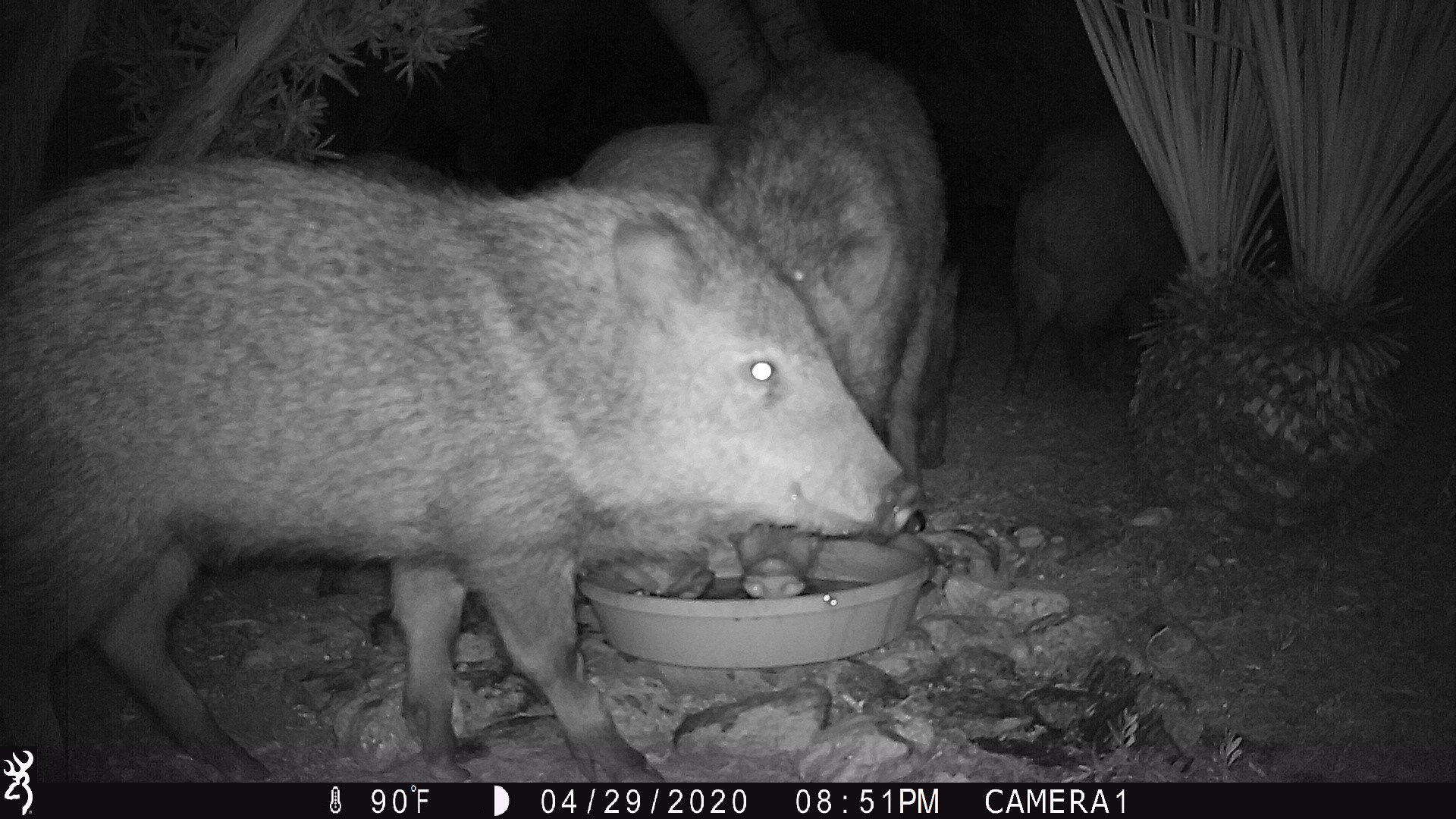
I’m posting images taken at the end of April and early May. Javelina are thirsty creatures and will drink the saucer dry. When that happens, the other animals must wait until morning for a refill. My daytime wish for a hawk to drop in has not happened. However, my powers of wishful thinking will eventually bring a big bird to the dish. In the meanwhile, consider the challenges desert creatures endure every single day. Water is precious to all.



Come on back and relax.
A tour of Public Lands & National Parks in the USA


 Consider Writing